A Platform for Accessible Grace
Fourteen years ago, Cameron Horner dove into shallow water, breaking his neck and damaging his spinal cord. He was immediately paralyzed from the chest down and began to sink helplessly to the bottom of the lake. As he realized he was about to die, he was filled with an overwhelming sense of peace.
“In the intensity of that moment, the Spirit of the Lord came over me and led me to prayer,” he remembers.
As Cameron called out to the Lord for rescue, his friend Christina found him under the water and pulled him to the surface, turning him on his back and supporting his neck to help him breathe. Amazingly, it was a maneuver the two of them had practiced the day before to show his niece what to do if someone was drowning.
In the days and months following his accident, Cameron’s story spread. Once he was able to leave the hospital, he began to share his testimony with churches and Christian groups all over the world. Even though his doctors explained he was permanently paralyzed, Cameron continued praying along with family and friends for healing.
Cameron had come to faith within the Word of Faith movement, which puts a large emphasis on prayers for healing. Whenever Cameron would visit a church to speak, he would often be approached by people who wanted to pray for his healing. Many times, strangers would place their hands on him and begin telling him to try to move his legs. Cameron was charitable towards these people, but at times he felt like he was a project.
He truly believed God could heal him, but as time went on, Cameron began to see that God had a purpose behind his disability that was much larger than receiving healing.
“You are doing the things, praying the prayers, but nothing is happening,” he says. “So you think, ‘Either God isn’t real, he doesn’t love me, or I don’t have enough faith.’ But maybe, I needed to rethink this.”
As Cameron looks back on those first few years, he sees how God was helping him develop his theology of suffering. He says it was having a biblical view of eschatology that helped him get out of bed each day.
“You really can’t get a robust theology of suffering without a theology of eschatology. Ultimately our hope is with the Lord in restored bodies in new creation. My eschatology became extremely practical.”
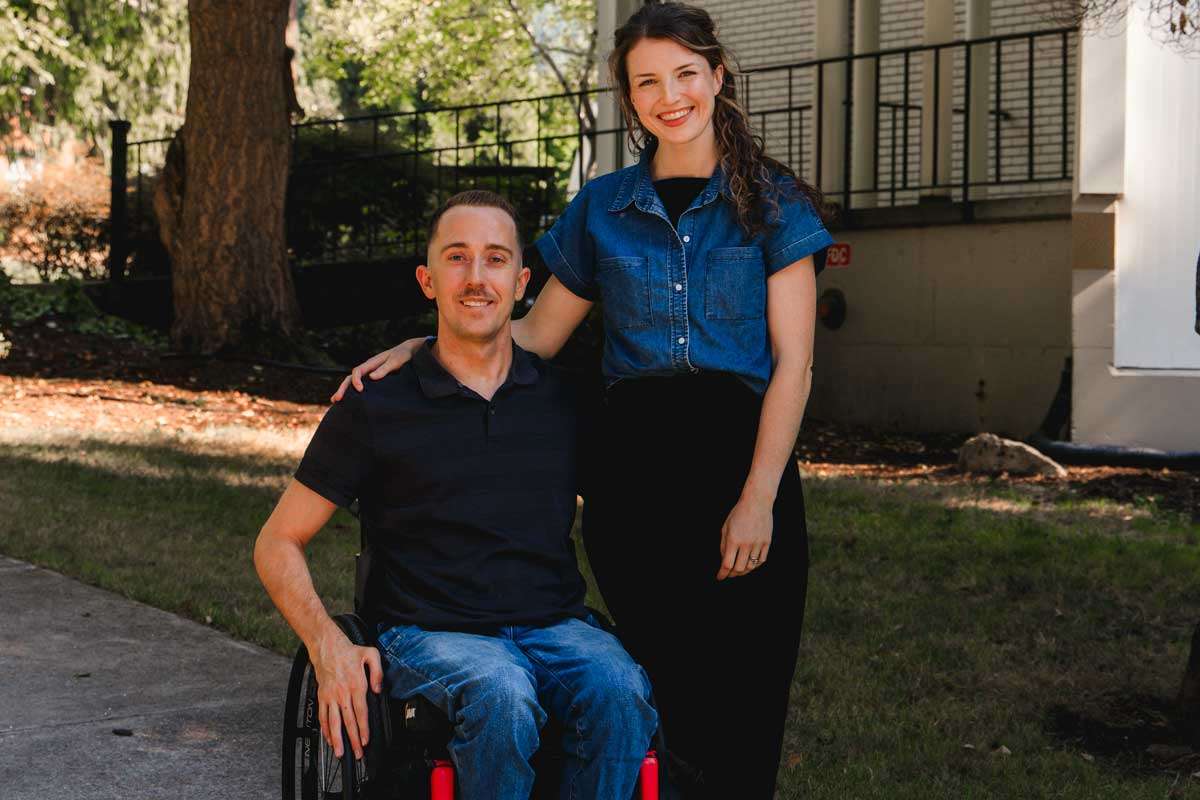
Cameron’s disability has given him a platform for ministry that goes beyond sharing his testimony. He and his wife Annie (a Western Seminary counseling grad) lead Accessible Grace (formerly known as “Cameron Horner Ministries”), which seeks to help churches better understand how to minister to the disabled community.
“One part of that message is that belonging is a step further than inclusion,” says Annie. “Inclusion is saying we will allow you to be a part of us, and here's what we can do to include you.”
But that’s not how the body of Christ functions in the New Testament, she says.
“Belonging says that there's something that you bring that we don't have without you.”
Cameron experienced the stark difference between these two attitudes at his former church in North Carolina. During a church construction project, the church’s leadership did not take him up on his offer to help with accessibility considerations. When he saw the new space, Cameron immediately noticed several issues, like no ramps up to the stage. The message to him was clear.
“They didn’t consider someone with a disability could be in a leadership role in that church,” he laments.
Today, Cameron and Annie are passionate about helping churches create an attitude of belonging for the disabled community. They point out that it is about much more than ramps.
“Maybe you’ve got the right bathrooms, and that’s great,” he says. “But maybe the congregation is not used to a person with autism or family with an autistic child, and don’t really know how to welcome them.”
This can communicate that certain people are barred from the life of the body of Christ, he says. It also can rob the church of the immense benefits that can come from learning how to be dependent on one another.
“Disability is a beautiful proclamation of who God is,” says Annie. “Dependence is OK and we need to depend on each other.”