Doctor of Ministry in Leadership, Innovation, and Theology
Launching January 2027!
We are living in a fast-changing, high-tech, pluralistic, spiritual-but-not-religious world. Church and ministry leaders must deepen their theological commitment to truth and the gospel of Jesus while learning to navigate the challenges and strategies needed for effective ministry. There is no better place to learn this than in the heart of global innovation in the Bay Area and Silicon Valley.
Western Seminary’s Doctor of Ministry degree will focus on what innovative missional leadership looks like in today’s world, and enable you to dive deeply into advanced studies in specific areas of ministry such as:
- Preaching in a Post-truth Culture
- Next Generation Ministry
- Worship, Music, and Arts Ministry
- Apologetics and Theology for the Missional Church
- Pastoral Counseling, Spiritual Formation, Chaplaincy
- Multicultural Ministry
- or develop a personalized concentration of study in an area of Christian Leadership
Credits30 |
Years2.5 Graduate in as little as 2.5 years. |
In-person & OnlineThe program includes a mix of three in-person, weeklong advances and online study. |
LocationsAnnual, one-week advances in Silicon Valley (San Jose), San Francisco, and Santa Cruz |
As we serve Jesus on mission in today’s world, we must be deeply thinking about ministry both innovatively and theologically. I greatly look forward to being part of the Doctor of Ministry degree with you.

Dan Kimball, DMin
Director of the Doctor of Ministry Program
Guest Instructors
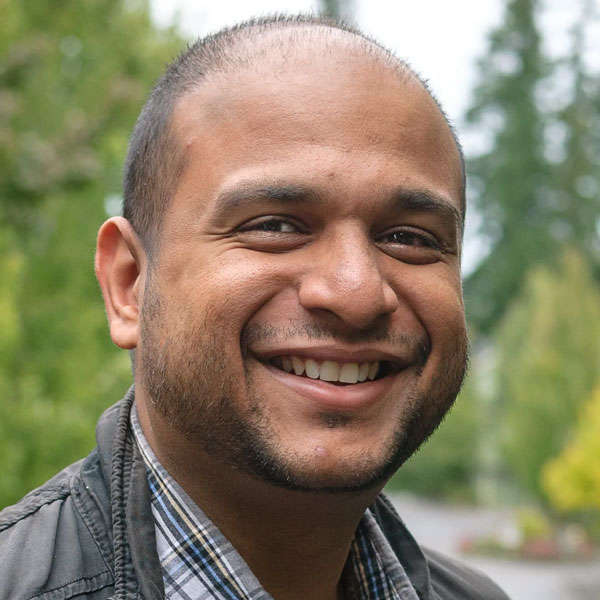 Nijay Gupta |
 Gavin Ortlund |
 Joel Muddamalle |
 Carmen Imes |
 Dave Ferguson |
 Derwin L. Gray |
 Lynn Cohick |
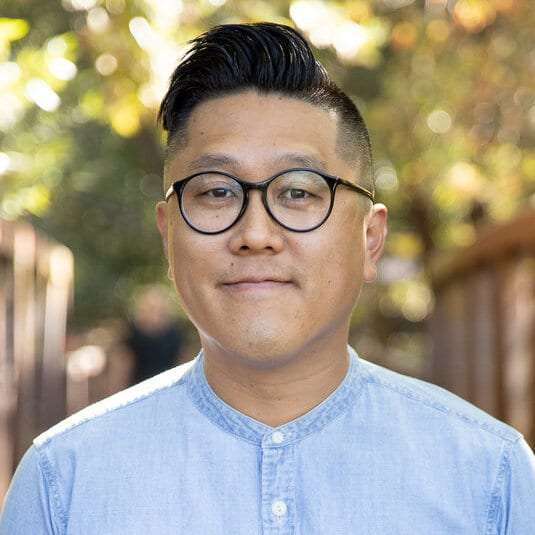 Jay Kim |
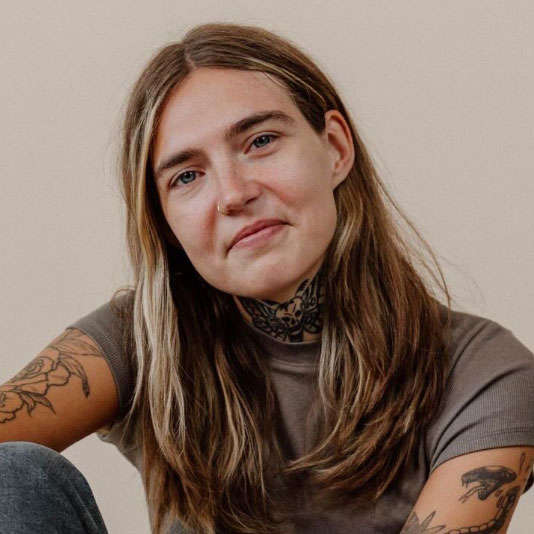 Brenna Blain |
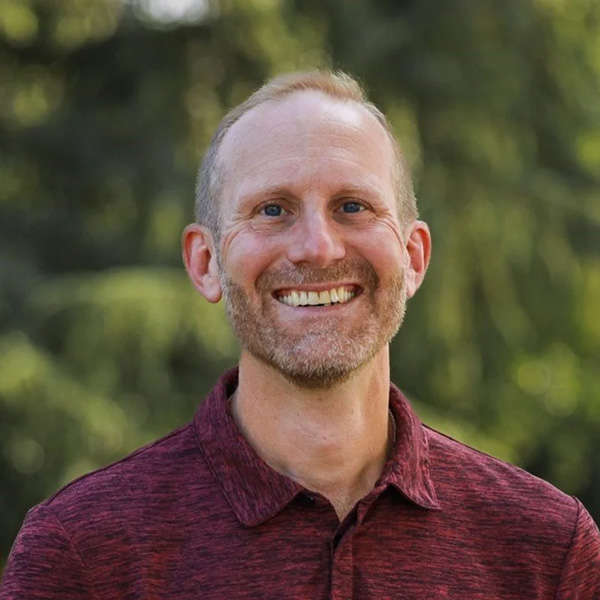 Paul Taylor |
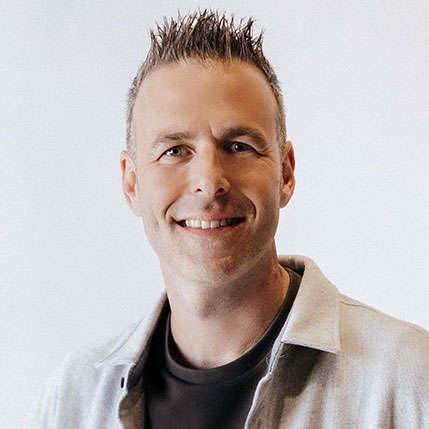 Filipe Santos |
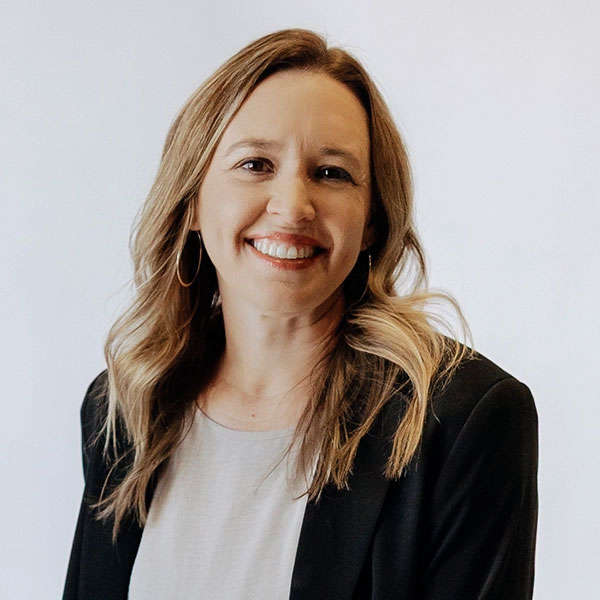 Mandy Santos |
Other Scholars and Church Leaders
The following scholars and church leaders will also be a part of the learning experience:
- Brian Broderson (Calvary Global Network)
- Daniel K. Eng (Western Seminary)
- Gerry Breshears (Western Seminary)
- Isaac Serrano (South Valley Community Church)
- Rene and Laurie Schlaepfer (Twin Lakes Church)
- John Y. Kwak (Western Seminary)
- Margaret Feinberg (author)
- Dave Lomas (Reality Church San Francisco)
- Chuck Conniry (Western Seminary)
- Phil and Diane Comer (Intentional Ministry)
- Chip Ingram (Living on the Edge)
- Tom Schreiner (SBT Seminary)
- John Raymond (Zondervan Publishing)
- Evan Wickham (Park Hill Church)
- Greg Koukl (founder, Stand To Reason apologetics ministry)
- Cindy Bunch (InterVarsity Press)
Learn From Scholars, Innovators, and Ministry Leaders
Cohort host Dan Kimball, DMin, has over 30 years of ministry experience in youth, college, young adult ministry and planted Vintage Faith Church in the progressive beach and university town of Santa Cruz, CA in 2004 where he still remains on staff. Dan has written several books, including How (Not) to Read the Bible: Making Sense of the Anti-women, Anti-science, Pro-violence, Pro-slavery and Other Crazy-Sounding Parts of Scripture.
Our program will combine top-level scholars in theology and Bible, leaders of fruitful ministries in the heart of Silicon Valley, and regional Christian technology innovators, who will bring advanced leadership principles that can be applied in today’s churches and ministries. Leaders will be equipped to serve Jesus faithfully and theologically in a rapidly changing, technology-driven, spiritually searching culture.
Part of our studies will be exploring cities and cultures in the New Testament and early church to analyze how Christianity and the message of Jesus spread and what principles may give us opportunities to use in today’s pluralistic world.
Develop Deep Relationships
We also will be forming cohorts in this degree and connecting you relationally with other students and mentors who are studying in your niche area. Cohort students go through a set of classes as part of their degree program simultaneously. They maintain continuous enrollment as they pursue their DMin.
The deep relationships developed in the cohort enable the friendship and trust for mutual growth in knowledge, character, and skills for ministry. Discussions and assignments are designed for immediate application in the students’ ministry context, enriching both the classroom and church life.
Cohort Structure and Options
We will gather three times for 5-day experiences together over two and a half years to attend core classes taught by scholars and leaders in their fields of expertise. During these days together we also will have specialization classes in ministry-specific concentrations chosen by students and led by seasoned ministry mentors who guide students’ progress towards dissertations in areas of practical ministry. Throughout the rest of each year, students continue studies through online meetings and training.
Over our three-year degree program, we meet in three locations:
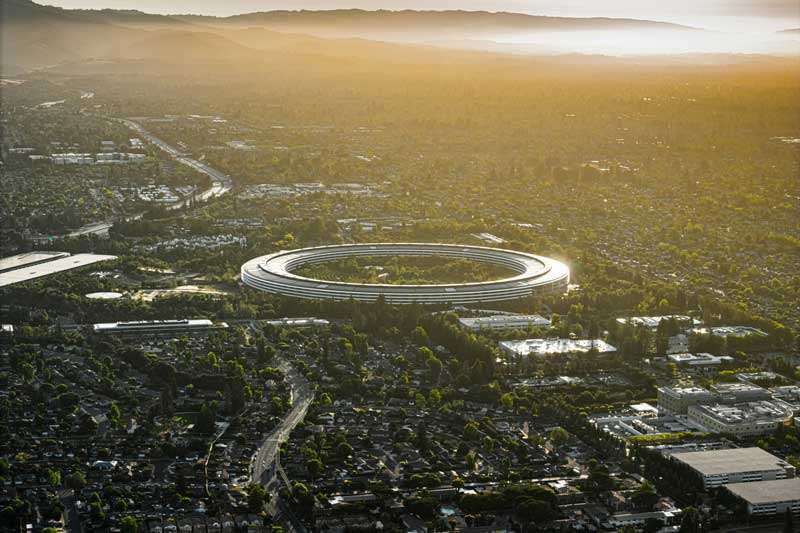
- Year 1: San Jose (Jan. 11–15, 2027) — the heart of Silicon Valley, multi-ethnic, multi-faith, tech-industry, and center of world innovation.
![Silicon Valley]()
- Year 2: San Francisco (Sept. 20–24, 2027) — according to some studies, this is one of the most unchurched and dechurched cities in America. Yet, God is doing some wonderful things that will be explored as we learn from leaders in this city.
![San Francisco]()
- Year 3: Santa Cruz (dates TBD) — a Silicon Valley beach-town environment, artistic community with a large, very progressive university.
![Santa Cruz]()


Course List
Please note that curriculum and sequence is subject to change.
| Core Courses: 18 credits | ||
|---|---|---|
| DM760 | Understanding Ancient and Future Ecclesiology | 3 |
| DM740 | Analyzing the Practices, Strategies, and Theology of Contemporary Ministries | 3 |
| DM750 | Theological Challenges in the Missional Church | 3 |
| DM730 | Leading and Innovating for a New Generation | 3 |
| DM710 | Communicating for Changed Lives in a Post-Truth World | 3 |
| DM720 | Thriving in Leadership in Mission-Driven Ministry | 3 |
| Research & Methodology Courses: 6 credits | ||
| DM702A | Integrated Research Methodology I | 1 |
| DM702B | Integrated Research Methodology II | 1 |
| DM702C | Integrated Research Methodology III | 1 |
| DM703A | Proposal & Research Design I | 1 |
| DM703B | Proposal & Research Design II | 1 |
| DM703C | Proposal & Research Design III | 1 |
| Dissertation Writing: 6+ credits | ||
| DM791 | DMin Dissertation | 6 |
| Total: 30 credits | ||
Course Descriptions
- Understanding Ancient and Future Ecclesiology
This course explores the birth of Christianity within the Greco-Roman world, a context saturated with polytheism, syncretism, and worldviews often in stark opposition—even hostility—to the early church of Jesus. It equips Christian leaders by drawing historical insights from mission in a pre-Christian culture and analyzing their relevance today by comparing them with effective practices in contemporary ministries and churches within a post-Christian context. The course lays a foundation for future courses and the direction of the doctoral project.
*The in-person 5-Day Advance will take place this semester in San Jose at Western Seminary/Westgate Church and will have online components as well. - Analyzing the Practices, Strategies, and Theology of Contemporary Ministries
This course will focus on contemporary evangelical church history as a foundation for then examining the development and origins of various ministry practices happening in today’s church and Christian world. Students will analyze in detail several specific churches and/or types of ministries through a theological lens, examining their history, local demographics, leadership, the usage of music, and other critical research factors. This will enable an analysis and evaluation that can be used towards the formation of the personal dissertation research in the specific focus area of the doctoral project - such as preaching, next generation ministry, church leadership, music ministry, spiritual formation, apologetics etc.
* This course will be online via Zoom, with interactive discussion between students and instructors. - Theological Challenges for the Church on Mission
This course trains the student to exegete today’s ministry contexts and respond thoughtfully and deeply theologically to major issues impacting people’s personal values and beliefs, such as race, gender, sexuality, syncretism, consumerism, individualism, AI, and technology. These contemporary challenges will be applied to the student’s doctoral project's focus area.
*The in-person 5-Day Advance will take place this semester in San Francisco at RealitySF Church and will have online components as well. - Leading and Innovating for a New Generation
This course examines how to lead and structure ministries in a rapidly changing culture shaped by individualism, anti-institutionalism, secularization, hyper-tolerance, and the constant influx of digital information and opinions. As these forces influence the minds and hearts of the next generation, we will consider how the church can respond faithfully theologically and effectively. Regardless of one’s role in ministry, this course will show how to think and lead strategically with necessary changes and adaptations so that new generations may come to know the true Jesus and the gospel, grow in faith, and be equipped to serve Him on mission in their world. A case-study looking into the life of Daniel in Babylon will be used amidst other biblical examples, of how younger generations can make world-changing differences for the gospel.
*This course will be online via Zoom, with interactive discussion between students and instructors. - Communicating for Changed Lives in a Post-Truth World
This course is an advanced study in the process of moving from the biblical texts to preaching, teaching, and proclaiming the message of Jesus in different contexts. This course will help students discern how to organize and develop teaching and communication for diverse demographics, including different generations, varying levels of spiritual maturity, and different worldviews. This course will also address the communication that goes beyond sermons and teaching times, but includes what is visually experienced through our meeting spaces, graphics, and verbiage we use when designing mission-driven ministry. Sermons and/or specific teaching presentations will be prepared by the student and tailored to a specific demographic that aligns with their doctoral project.
* This course will be online via Zoom, with interactive discussion between students and instructors.. - Thriving in Leadership in Mission-Driven Ministry
This course will focus on how the existence of the Ephesians 6:12 spiritual realm impacts mission-driven ministry and the lives of leaders. We will examine New Testament leadership structures as they were developing, along with a study of the ancient cosmopolitan city of Ephesus, with its polytheistic, pagan, and occult-practicing dynamics, and what the early church faced, comparing it to contemporary ministry contexts. Students will study time-tested spiritual practices that enable fruitful, long-term ministry leaders in mission-driven ministries in today’s world.
*The in-person 5-Day Advance will take place this semester in Santa Cruz at Vintage Faith Church and will have online components as well.
Frequently Asked Questions
What is the 10-page research paper needed for applying?
Applicants must submit a 10+ page writing sample that shows their writing and research abilities. This does not have to be a new piece of writing; it can be something written during the applicant’s previous MA or MDiv program. Writing samples are used to help gauge an applicant’s preparation for doctoral level writing and research.
What if my master’s degree is not accredited?
Western Seminary is committed to admitting students who show a background and aptitude for their studies and can succeed in their desired program. If your MA is unaccredited, we may request additional information about the program to ensure it meets the academic and vocational requirements for entry into the program. Applicants to the Doctor of Ministry submit writing samples that help demonstrate a student’s capacity to write and research at a doctoral level. If your master’s degree is not accredited, we encourage you to talk with the admissions team about your situation so we can help gather additional materials.
What if my master’s degree is not in Bible, theology, or ministry?
Western Seminary wants to ensure that any student admitted to the Doctor of Ministry is able to “engage as a ministry peer with other students in this advanced professional doctorate.” This means students must have a working understanding of the biblical, theological, and ministry traditions covered by the doctoral program. Normally this competency is proven by completing an MA degree in Bible, theology, or ministry; however, Western is exploring ways of admitting students who can show an equivalent standard of knowledge despite not having an MDiv or MA focused on Bible and theology. This will likely involve some type of competency testing or level setting courses. Applicants who do not have an MA in Bible, theology, or ministry should contact the Doctor of Ministry director to have a conversation about their background and experience to help gauge their fit with the Doctor of Ministry.
If I live in the Bay Area, can I commute in for the intensives?
Yes, students living in the Bay Area are welcome to commute in for the in-person intensives and are not required to stay in the recommended lodging. However, because the schedule may include early mornings and some late evening sessions, we encourage students to keep commute times in mind when planning transportation during the intensive week.
What campus should I choose when applying?
Applicants should select "Global Campus" when applying, even though the in-person classes are based in the Bay Area.
Sign Up — Stay Connected
This new Doctor of Ministry offering will launch in 2027, under the direction and curation of Dan Kimball, DMin. On this webpage, we will be posting updates such as specific dates, course descriptions, sequences, names of faculty, lecturers and specialty mentors, and details on areas of specialization.
If you would like to receive email updates about the degree or begin the process of applying for admission now, please complete this short form below and we will be in contact with you! We are here for answering any of your questions, to pray with you in the process of discerning joining in this degree class.